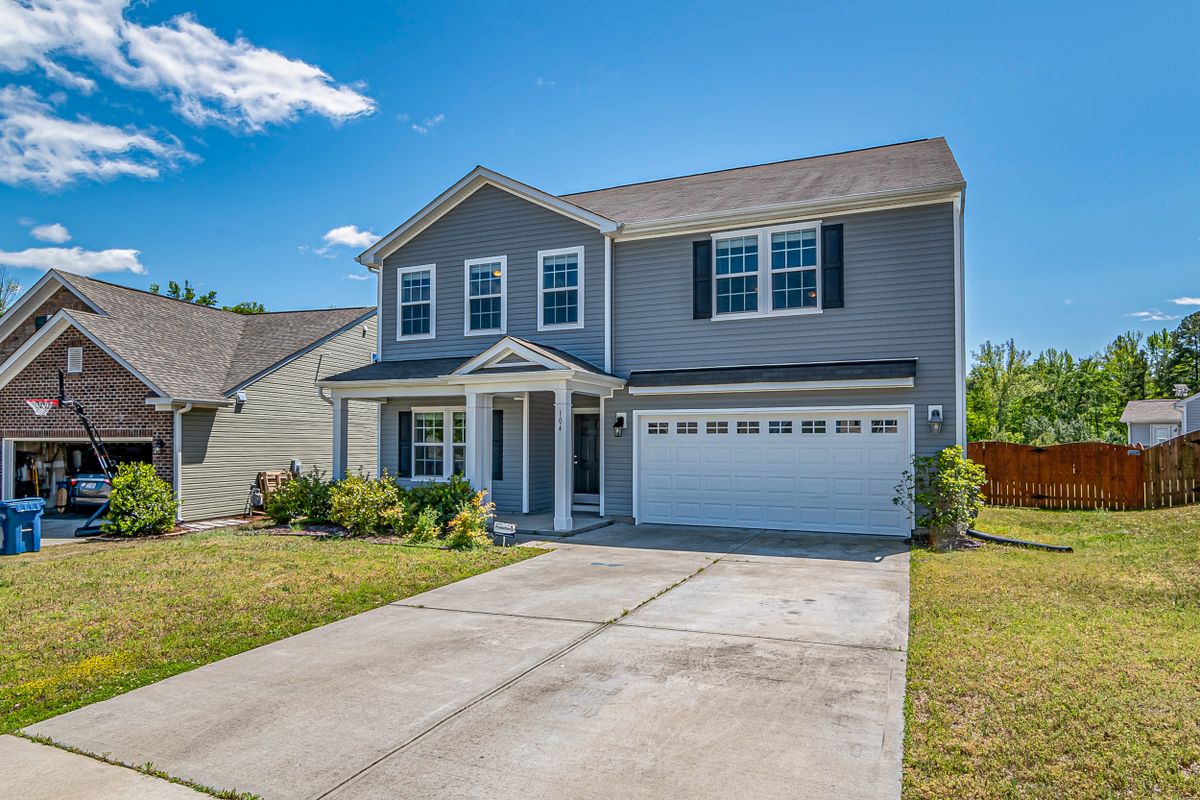
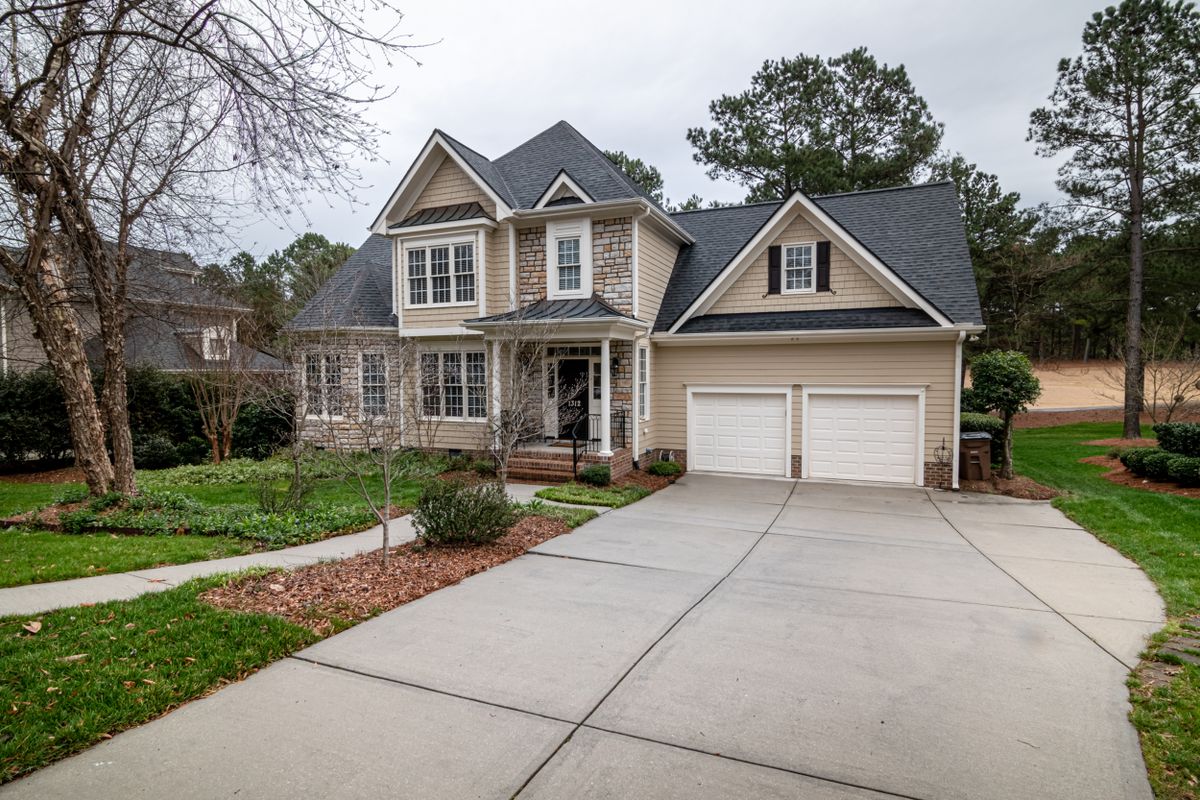
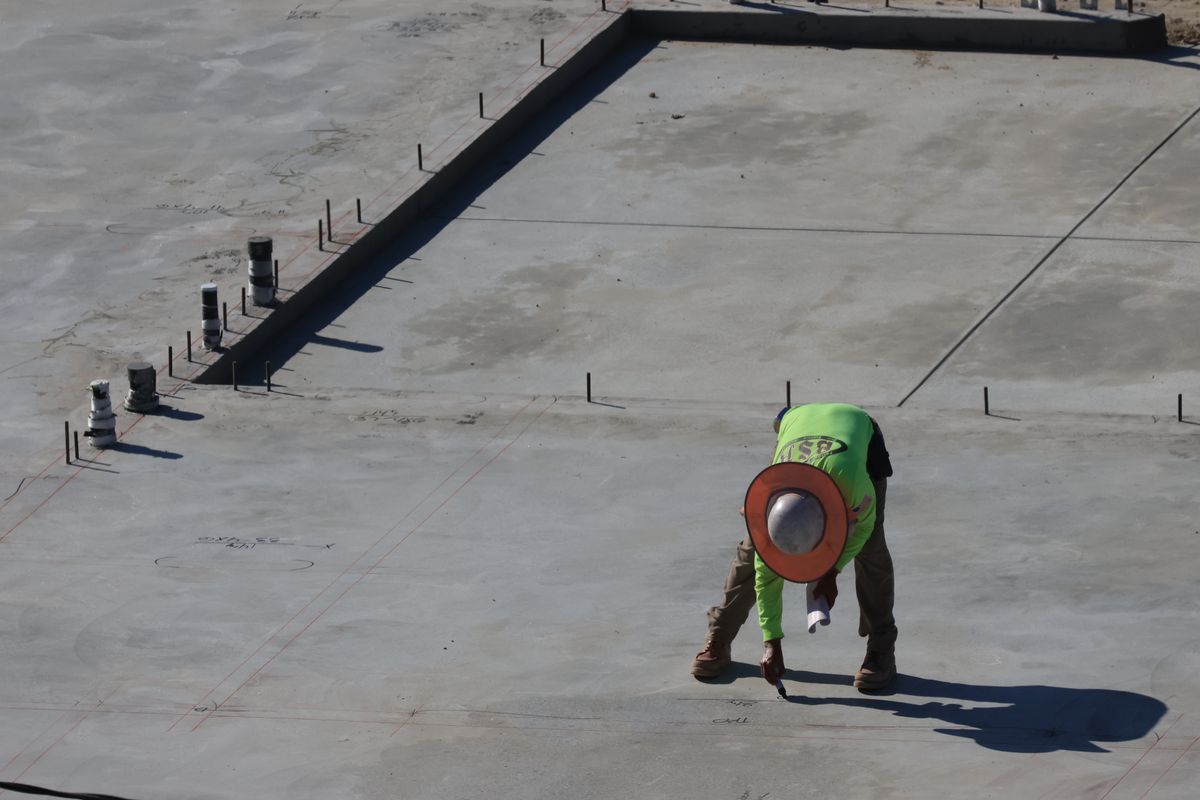
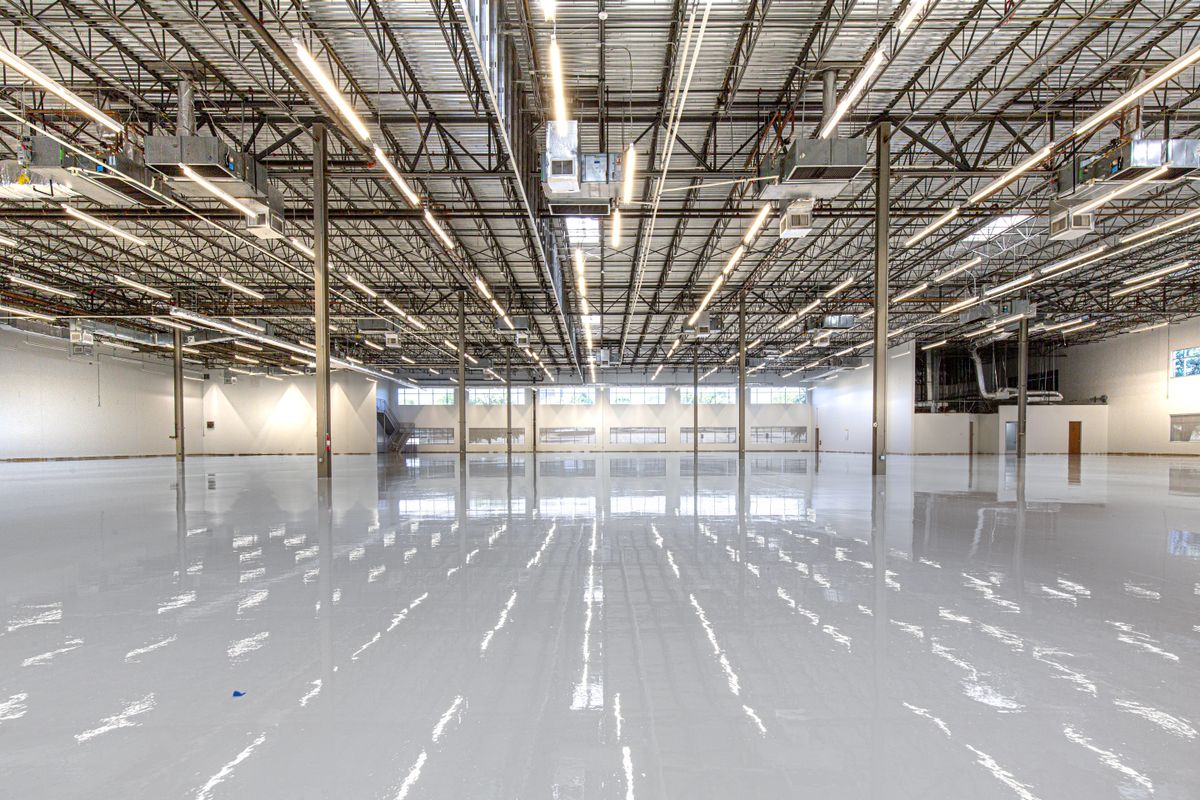
The short version: in Los Angeles, the number on a driveway bid is decided by the ground under the slab and how the crew reaches your lot, not by a published per-square-foot average. A flat lot in Westchester, a fill-built hillside parcel in Mount Washington, and a zero-lot-line house in Mar Vista are three different projects wearing the same name, because base, drainage, and access all change. A trustworthy quote comes from standing on the property, and that is the step we never rush.
Why driveways crack here: the soil does the damage, not the concrete
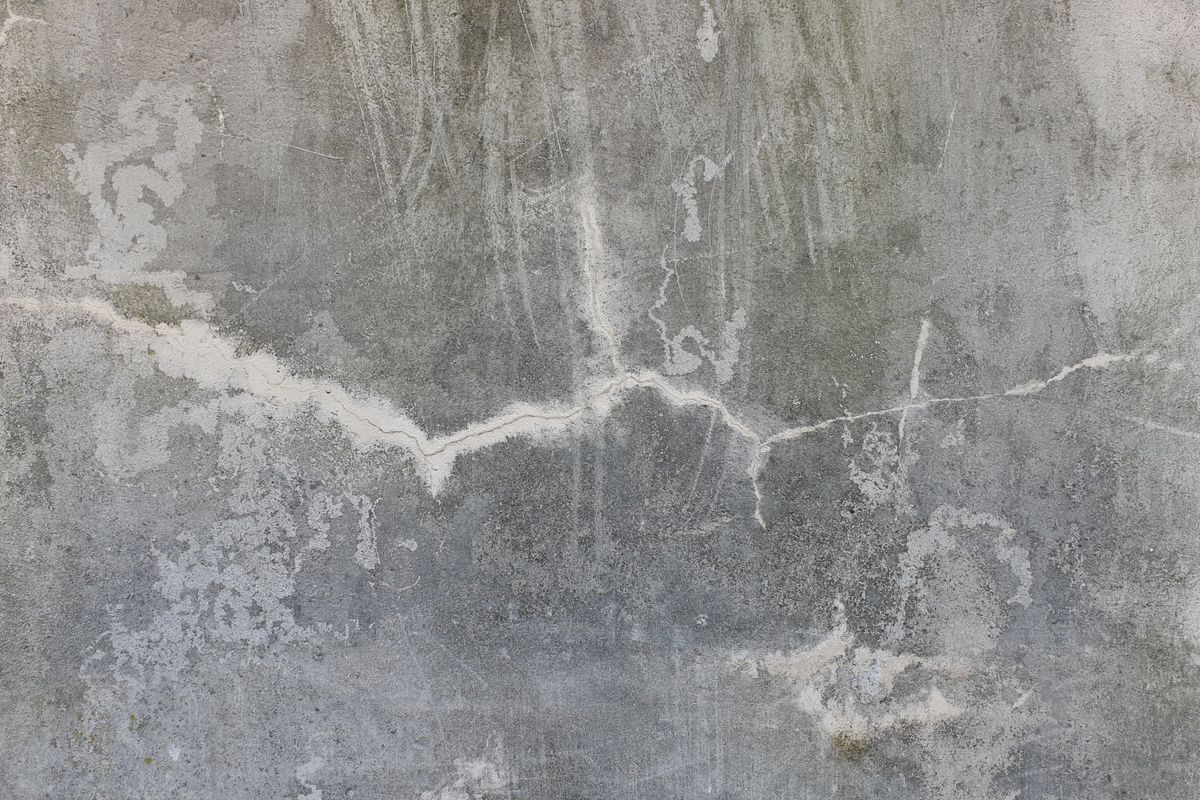
The main reason driveways across the city heave, settle, and split is expansive clay moving through the year. Much of the basin, the Valley, and the inland flats sit on clay that drinks in the winter rain and swells, then releases it across the dry summer and contracts. A driveway resting on that soil is pushed up and dropped back down every cycle. When the slab sits on a shallow, under-compacted base with no honest joint layout, it cannot flex with that movement, so it fails - usually a crack straight across the width or running off a corner, and sometimes a panel rising into a ridge that traps water next to the house.
The durable fix is to put money into the base and the steel, not into a thicker top pour. A properly compacted subgrade, reinforcement that ties the slab together, and control joints cut on a real grid let the concrete fail along the lines we chose instead of wherever it wants. On the looser, faster-draining soil closer to the coast - stretches of the Westside and the South Bay - the same detail can be a little lighter because the ground moves less. That is exactly why we read the dirt at your address before quoting, rather than multiplying square footage by a rate.
Sloped and cut-and-fill lots make this a different job
A large portion of the best-loved parts of the city - the hill streets of Silver Lake, Echo Park, Mount Washington, the Hollywood Hills, Los Feliz, and the foothill runs toward Glendale and Pasadena - is steep or built on engineered fill. A hillside driveway usually spans two kinds of ground: original native soil in one stretch and compacted fill in another, and those two do not move together unless the fill was placed and verified to spec. What you see later is a driveway cracked at the seam, dipping at the garage door, or shoving sideways against a retaining wall.
On this kind of site the driveway work is really grading and drainage work first: a subgrade that bites into the slope, the right depth of compacted aggregate, and a fall that carries water off the driveway and out to the street instead of back at the foundation. A steep lot may also force a steeper approach or a step to reach the garage, which changes how the slab is formed and finished. This is precisely the driveway where a per-square-foot number given over the phone is a guess - the base is the real product, and you cannot see it in a photo.
What separates a driveway that lasts from one that does not
The sequence on an LA driveway pour is not optional, and a slab built to last follows the same order every time:
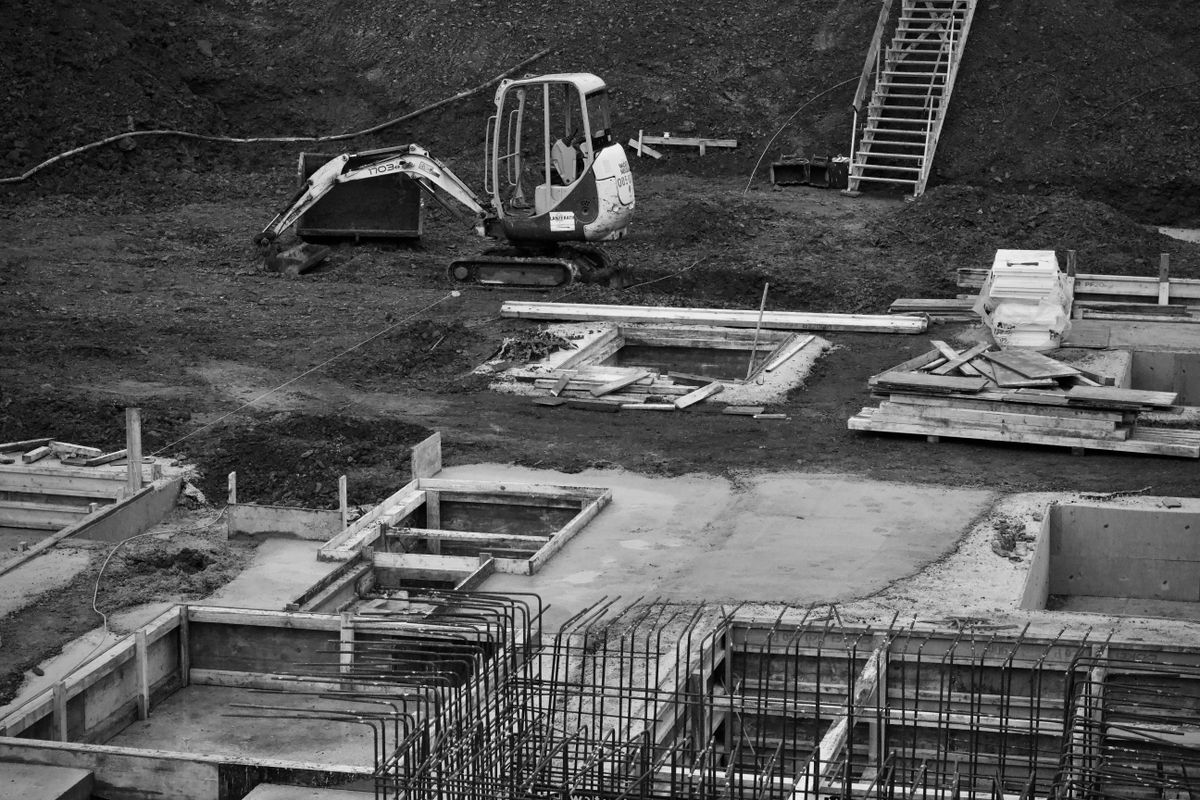
- The base. We strip the old material, compact the subgrade, and put down the thickness of aggregate your soil and your vehicles call for. On clay this is where the whole job is decided - a thin or half-compacted base is the most common reason a new driveway cracks inside its first few years.
- Reinforcement. Rebar or welded wire mesh goes in on the detail the slab needs so it acts as one unit across the wet-and-dry movement and minor settling instead of splitting into pieces.
- Thickness matched to the use. A normal passenger driveway is poured four inches; where an RV, a box van, or a delivery truck actually parks, we go thicker and add steel for the extra weight. Valley homes with wide aprons and dedicated RV parking are the usual case for the heavier detail.
- Joints on a plan. We cut or tool the control joints on a real grid so the concrete cracks where we intend - on the lines - not across the open field of the slab.
- A real cure. LA's dry heat pulls the surface moisture out of fresh concrete if it is not kept damp through the first days, leaving it weaker and prone to surface cracking and dusting. We pour around conditions and keep the slab wet until it reaches strength. A driveway that gets babied in its first week is the one still tight a decade on.
The apron at the street, the right-of-way, and the permit most people miss
At the front edge of the property the driveway crosses the sidewalk and curb to meet the street, and that strip - the apron - lies inside the public right-of-way. Pouring there calls for a permit from the city's engineering bureau, or from the building department of the individual city where the work happens, since Santa Monica, Pasadena, Long Beach, Glendale, Burbank, and Torrance run their own counters with their own thresholds. It is a genuine line item and a genuine requirement, not paperwork we skip. The apron must also hit the city's curb, grade, and access detail because it is public pavement even though it fronts your house. We secure the permit, build the apron to the city's drawing, and line up the street work so the requirement does not ambush you later. Street work done without one is the kind of thing that surfaces at sale or refinance and ends with finished concrete coming out.
Stamped and colored driveways, honestly explained
Because the driveway is one of the largest visible hard surfaces on an LA property, plenty of owners ask about a stamped or colored finish instead of plain broom concrete. Stamped concrete delivers the look of stone, brick, or plank as a single slab - no separate paver units to drift, no weeds in the joints - which works well in the region's dry climate because the sealed color holds for years between refreshes. We pour full stamped driveways plus borders and banding that elevate a plain finish. The candid note is that decorative work raises the cost and the sealer needs periodic renewal, and the finish only survives if the slab under it is built right - so we get the base and the steel correct first and make it handsome second.
Repair, resurface, or tear out and start over
Not every tired driveway in the city has to be replaced. If the concrete is sound below but stained, spalled, or simply dated, an overlay or micro-topping can refresh it for less than a full replacement. The catch is that an overlay only works over healthy concrete - when the base is failing on clay, a topping cracks along with it, and we will tell you that rather than sell you a fix that fails. When a slab is genuinely past saving - cracked every which way, rocking underfoot, sitting on a dead base - removing and re-pouring the panels is cheaper than paying twice. Our resurface-versus-replace guide lays out the honest call for your situation.
What really moves a Los Angeles driveway bid
Square footage is only where the number starts. What shifts an LA driveway quote is the soil (clay calls for a heavier base), the access (a level, easily reached lot is inexpensive to work; a steep or gated one where concrete has to be moved up by pump or buggy adds labor), the demolition of the old slab, whether the surface is plain or stamped/colored, and the apron permit when the work touches the street. We give a firm written bid after a site visit, never a phone figure - because a driveway bid is only as good as what sits under the slab, and that is the part that has to be seen. For honest ranges and the factors that move them, the LA driveway cost guide walks through the numbers.
Getting started on a Los Angeles driveway
Whether you are pouring new, repairing an older slab, or weighing a resurface against a tear-out, the first move is a site visit. We check the ground, the access, the grade, and what is already there; tell you plainly whether your soil needs a specific base detail or an engineer; and give you a firm written bid for the real scope. Because we batch work in the same area on the same week, driveway jobs across the city - from the Valley blocks of Sherman Oaks and Encino out through the Eastside and the Westside - are often easier to say yes to than you expect. Start through the form on this page and we will put eyes on your driveway before anyone names a number.